


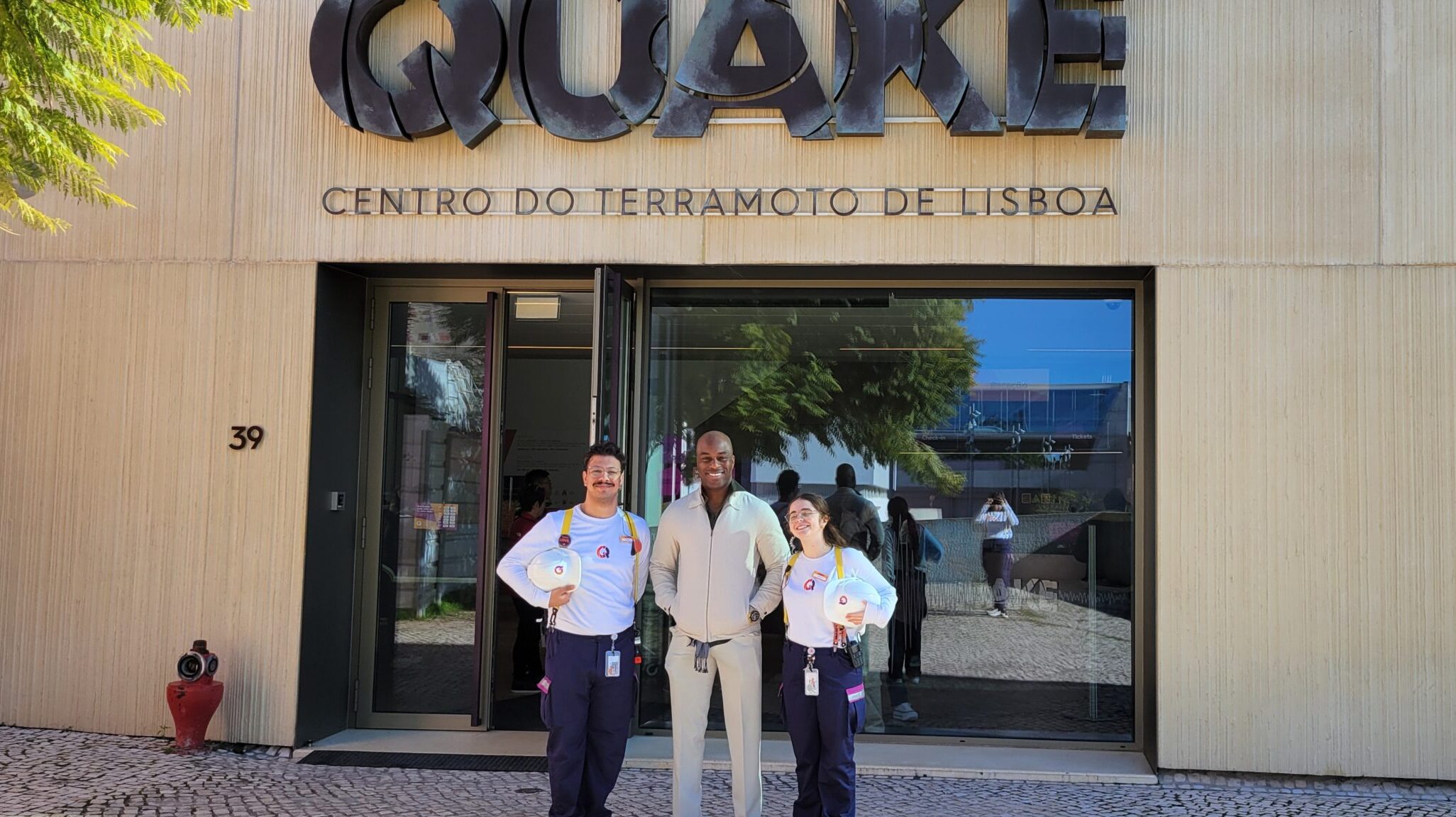
Lessons in Resilience: Reflections from the Quake Lisbon Earthquake Museum
During a recent visit to Portugal, I had the opportunity to experience the Quake Lisbon Earthquake Museum, an immersive, thoughtfully designed space dedicated to one of history’s most devastating disasters: the 1755 Lisbon earthquake. What struck me most wasn’t only the scale of destruction that reshaped a city and a nation, but the clarity with which Quake connects history, human behavior, and recovery.
For those of us engaged in disaster preparedness, emergency management, and long-term recovery, Quake is more than a museum. It is a living classroom, one that reinforces why resilience must be built before disaster strikes and sustained long after headlines fade.
What Long-Term Recovery Work Teaches Us
The Lisbon earthquake, followed by fires and a tsunami, devastated infrastructure, displaced thousands, and disrupted economic and social systems. Yet what followed became a blueprint for modern recovery: coordinated rebuilding, new building standards, data-driven decision-making, and an emphasis on public trust.
For those working in disaster long-term recovery (LTR) today, several lessons rise to the surface:
- Recovery is not linear. It unfolds in phases: response, stabilization, rebuilding, and renewal, each requiring different leadership and resources.
- Community buy-in matters. Lisbon’s recovery succeeded in part because residents were treated as stakeholders, not bystanders.
- Systems outlast events. The policies, institutions, and relationships built during recovery often define a community for generations.
These lessons mirror what we’ve seen across the United States, after hurricanes, wildfires, earthquakes, floods, and pandemics, where communities that recover best are those that organize locally and act collectively.
Lessons for Emergency Managers
From an emergency management perspective, Quake reinforces truths that practitioners know well but must continually advocate for:
- Preparedness saves lives, but education sustains preparedness.
- Risk communication must be accessible and experiential, not buried in technical plans.
- Cross-sector coordination, government, nonprofits, faith groups, and volunteers, is not optional; it is essential.
Quake’s immersive approach demonstrates how people learn best when they can feel the consequences of disaster and understand their role within the system. Emergency managers are not only planners and responders, they are educators, conveners, and stewards of public trust.
Aligning with Our Vision: A Center for Community Resilience
The experience at Quake Lisbon deeply aligns with the D’Andre D. Lampkin Foundation’s vision for a Center for Community Resilience here in the United States.
We envision a physical, community-centered space that would:
- Promote community stakeholdership, empowering residents to see themselves as active participants in preparedness and recovery
- Serve as a hub for volunteerism and training, equipping grassroots leaders with practical skills
- Preserve and share lessons learned from disasters we have survived together, ensuring hard-earned knowledge is not lost
- Support volunteer-driven, sustainable initiatives across education, health, disaster readiness, and economic development
At its core, this Center would exist to help build resilient, self-reliant communities, communities capable not only of surviving disaster, but of emerging stronger and more connected.
Why Funding Matters
Turning this vision into reality requires strategic investment. A Center for Community Resilience is not just a building, it is an ecosystem:
- Training spaces for volunteers and youth
- Exhibits and storytelling that honor lived experience
- Convening rooms for cross-sector collaboration
- Programs that translate resilience theory into everyday practice
Funding this work means investing in prevention, preparedness, and people. It means reducing future losses by strengthening communities today.
Moving Forward, Together
Standing in Quake Lisbon, surrounded by stories of devastation and renewal, I was reminded that resilience is not abstract. It is built by ordinary people making intentional choices, often in extraordinary circumstances.
The D’Andre D. Lampkin Foundation is committed to carrying these lessons forward, translating global insights into local impact, and creating a space where communities can learn, prepare, heal, and lead together.
With the right partners and supporters, we can build a Center for Community Resilience that honors the past, prepares for the future, and strengthens the bonds that hold us together, before the next disaster tests them.
Resilience is not what happens after the crisis. It is what we build long before it.

Leave a Reply
You must belogged in to post a comment.