


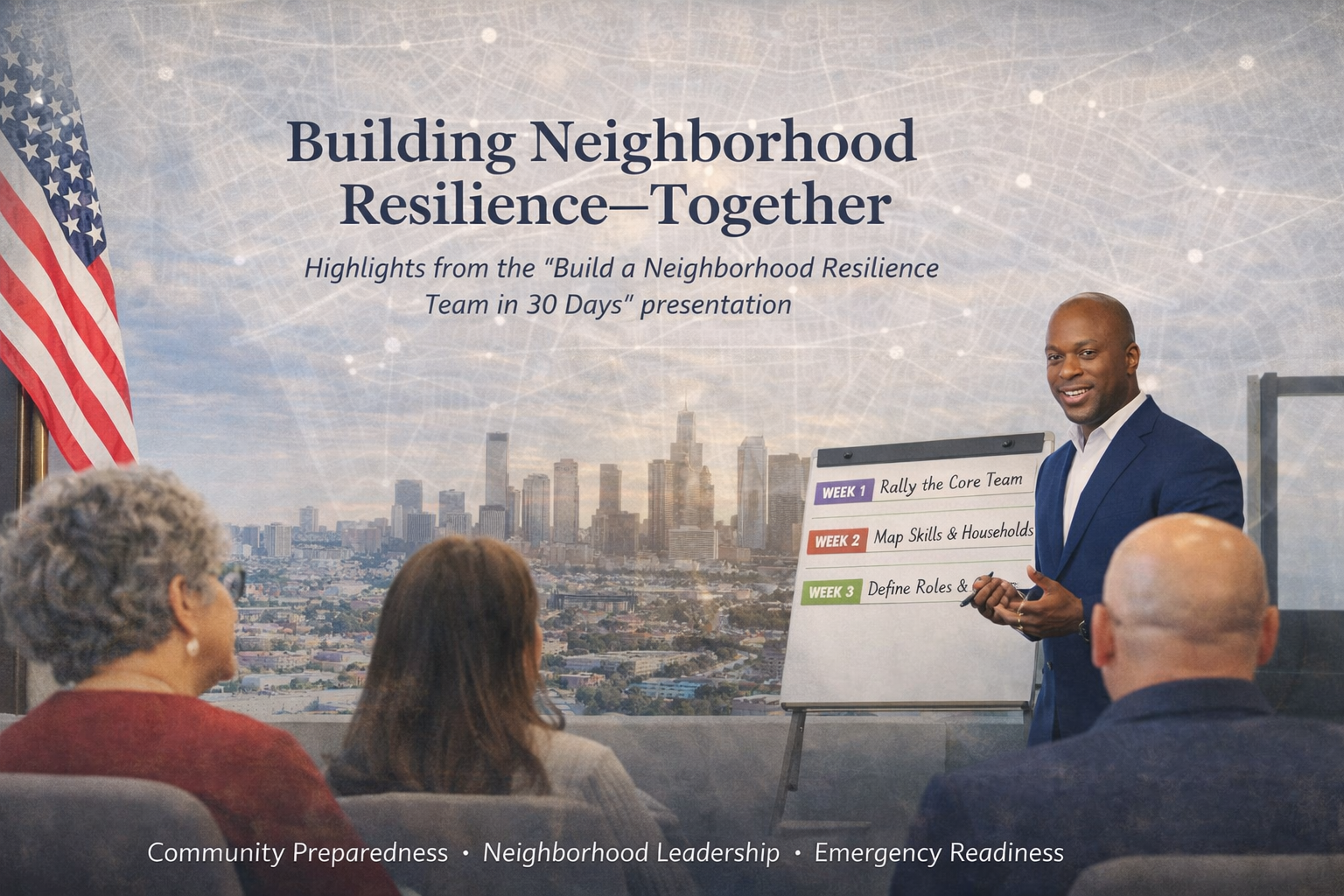
Building Neighborhood Resilience, Together
On January 13, the D’Andre D. Lampkin Foundation was honored to present Build a Neighborhood Resilience Team in 30 Days at the Emergency Network Los Angeles (ENLA) Lunch & Learn, a gathering that brought together nonprofit leaders, city officials, and individuals actively engaged in emergency management across the City of Los Angeles.
The Lunch & Learn provided a collaborative space to explore how neighbors, when equipped with the right structure, tools, and mindset, can become the first line of resilience during emergencies, disasters, and prolonged disruptions. The Foundation’s presentation reinforced a core belief: strong neighborhoods save lives.
Why Neighborhood Resilience Matters
In large-scale emergencies, professional responders may be delayed due to the scope of the incident. In those critical early moments, neighbors are often the first responders. The Foundation’s presentation focused on practical, people-centered strategies to help communities organize quickly, reduce chaos, and support one another until formal resources arrive.
Participants represented a wide range of sectors, housing, homelessness services, public safety, faith-based organizations, and grassroots mutual aid, each bringing lived experience and frontline insight into what communities need most when systems are stretched.
Inside the “Build a Neighborhood Resilience Team in 30 Days” Framework
Drawing from real-world emergency response, community engagement, and disaster recovery work, the Foundation outlined a simple, actionable 30-day model designed to be adaptable across neighborhoods of all sizes and capacities. Key elements included:
Week 1: Rally the Core Team
Neighbors identify a small leadership group, discuss local risks, define shared goals, and set a kickoff agenda to establish momentum and trust.
Week 2: Map Skills and Households
Participants map neighborhood skills, identify priority or vulnerable households, and begin building a phone tree to ensure reliable communication during disruptions.
Week 3: Define Roles and Communication
Clear roles are assigned, such as coordinators, wellness check leads, and logistics points of contact, along with agreed-upon communication channels to streamline coordination before and during incidents.
This phased approach emphasizes clarity over complexity, empowering communities to act without waiting for perfect conditions or outside directives.
A Shared Commitment to Preparedness
The discussion that followed the presentation highlighted the growing recognition across Los Angeles that community preparedness is a shared responsibility. Attendees exchanged ideas on adapting the framework for apartment complexes, faith congregations, service-provider networks, and neighborhoods with language or accessibility barriers.
The Foundation also referenced broader themes explored in its ongoing work on neighborhood resilience, including community trust, inclusive leadership, and sustainable preparedness models that can evolve over time. Additional context and resources are available through the Foundation’s published update on the initiative.
Looking Ahead
The D’Andre D. Lampkin Foundation remains committed to advancing community-driven resilience through education, partnerships, and practical tools that meet people where they are. Presentations like this ENLA Lunch & Learn reflect a growing movement, one where neighbors are no longer passive recipients of aid, but active participants in preparedness, response, and recovery.
The Foundation extends its gratitude to Emergency Network Los Angeles and all attendees for their engagement, insight, and shared dedication to building safer, more resilient communities across Los Angeles.
To learn more about the Neighborhood Resilience Team model or to explore how it can be implemented in your community, connect with the D’Andre D. Lampkin Foundation.

Leave a Reply
You must belogged in to post a comment.