


The 2026 City of Ontario Independence Day Parade offered more than a celebration of America’s 250th birthday. It became a moving showcase of the stories, traditions, people, and industries that helped shape the Ontario community.
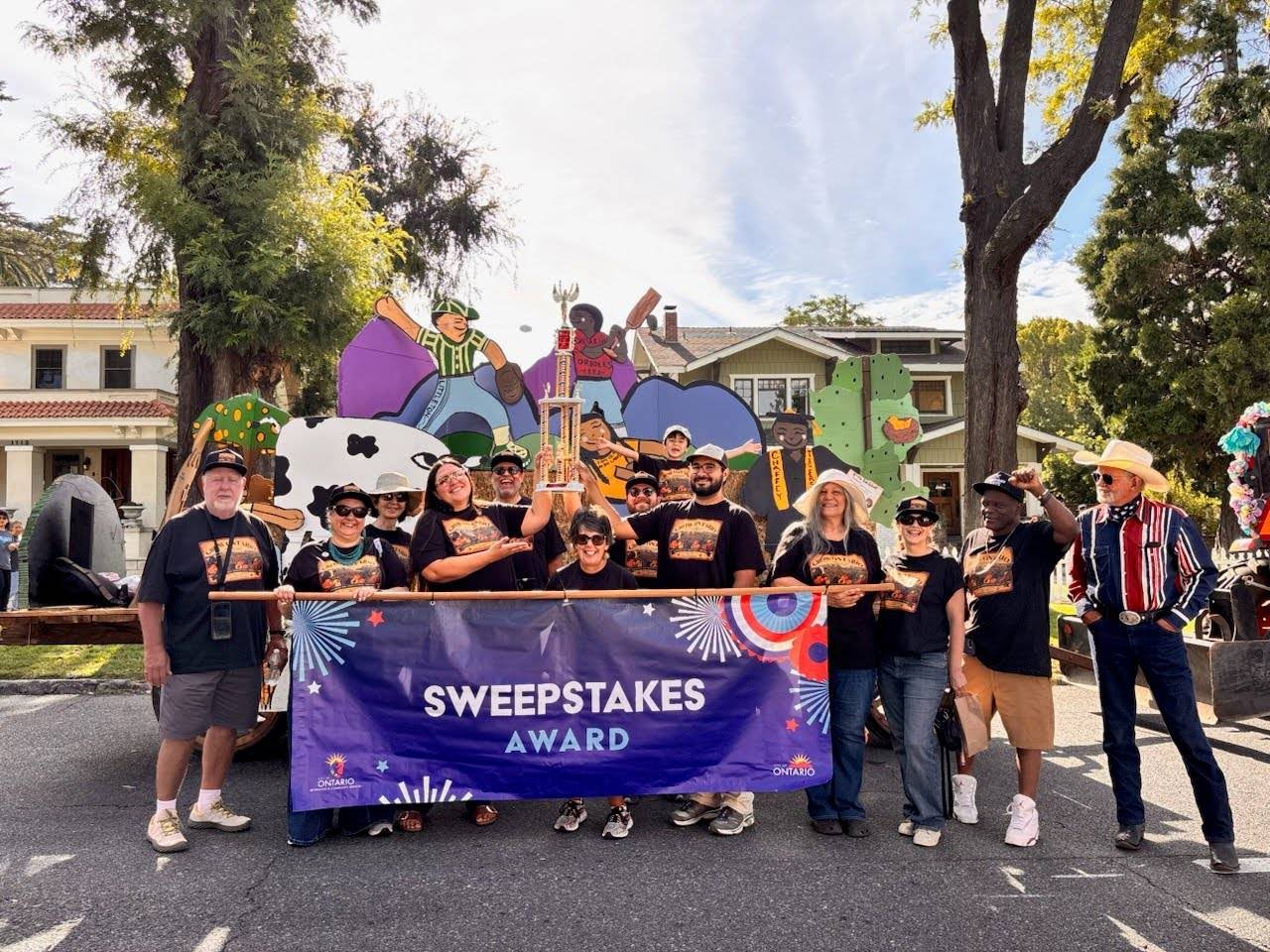
Among the parade’s most memorable entries was “E-I-E-I-Ontario,” created by the Southern California Agriculture Land Foundation and Farmer Randy and Friends, which received the Sweepstakes Award for Best Overall float design.
The award-winning entry celebrated Ontario’s deep agricultural roots through a colorful, imaginative tribute to the farms, dairies, orchards, and growers that helped build the community. According to the group, the concept brought a vintage Ontario produce-crate label to life while depicting children playing, planting, and growing food on the city’s historic agricultural lands.
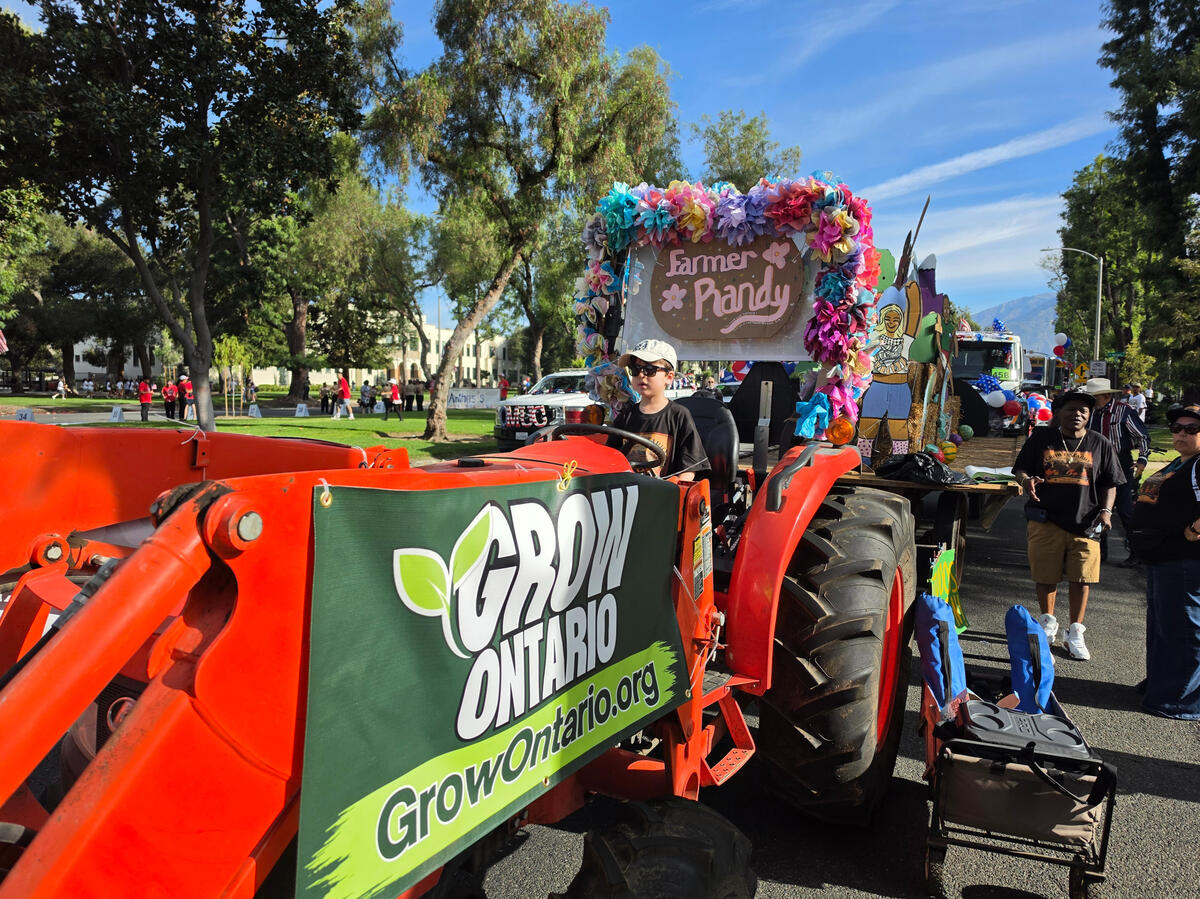
Leading the entry was Farmer Randy of Amy’s Farm aboard a tractor pulling a 100-year-old handmade wooden farm trailer, complete with distinctive wood-spoked wheels. The historic trailer itself served as a powerful reminder that local history does not always live behind glass in a museum. Sometimes, it continues moving through the community, carrying stories from one generation to the next.
Agriculture as Part of Ontario’s Story
Long before Ontario became the dynamic city it is today, agriculture played a defining role in its growth and identity.
Farms, orchards, dairies, packing houses, and growers contributed not only to the local economy, but also to the culture and character of the community. Generations of families worked the land, produced food, built businesses, and helped establish the foundations upon which modern Ontario continues to grow.
The “E-I-E-I-Ontario” float honored that legacy in a way that was accessible, joyful, and educational.
Children depicted planting and harvesting reminded parade spectators that agriculture is not simply part of the past. It is also connected to the future.
Understanding where food comes from, appreciating the land that sustains communities, and recognizing the people who cultivate it are lessons that remain increasingly important in a rapidly urbanizing world.
Preserving History Through Creativity
Community history is often preserved through archives, museums, historic buildings, and written records.
But public celebrations offer another powerful tool.
A parade float can become a classroom.
A historic farm trailer can become a moving artifact.
A produce label can become a window into the identity of a community.
The Southern California Agriculture Land Foundation and its volunteers demonstrated that preservation does not have to be passive. History can be interpreted, shared, and celebrated in ways that invite people to participate.
That creativity matters.
When people can see themselves reflected in local history, they are more likely to value it. When children are introduced to the stories of the people and industries that shaped their hometown, history becomes more than a collection of dates. It becomes part of their own identity.
Agriculture and Community Resilience
The themes represented by “E-I-E-I-Ontario” also carry important lessons about community resilience.
Resilient communities depend on more than emergency plans and response systems.
They also depend on strong local relationships, access to essential resources, knowledge passed between generations, and an understanding of the systems that sustain everyday life.
Food is one of those systems.
Agriculture reminds us that resilience begins with the ability of communities to meet basic needs, adapt to changing conditions, and maintain connections between people, land, and resources.
As cities continue to grow, conversations about food systems, local agriculture, land stewardship, water, transportation, and sustainability become increasingly important.
Celebrating Ontario’s agricultural history does not require resisting progress. Instead, it creates an opportunity to ask thoughtful questions about how communities can grow while still preserving the lessons and values that helped make them strong.
Celebrating America Through Local Stories
America’s 250th birthday provides an opportunity not only to celebrate the nation’s founding, but also to reflect on the countless local stories that together form the American experience.
The story of Ontario is part of that larger history.
It is a story shaped by agriculture, immigration, entrepreneurship, architecture, public service, family, faith, education, and generations of people who invested their labor and hopes into building a community.
The Independence Day Parade brought many of those stories to life.
The D’Andre D. Lampkin Foundation was honored to receive the Chaffey Heritage Award for its educational tribute to architect Paul Revere Williams and the centennial of Ontario’s historic Post Office.
At the same time, it was equally important to celebrate the creativity and dedication of fellow parade participants whose work helped tell other important parts of Ontario’s story.
The Sweepstakes Award earned by “E-I-E-I-Ontario” was well deserved.
Its creators demonstrated that community heritage can be celebrated with humor, imagination, craftsmanship, and purpose.
Different Stories, Shared Purpose
At first glance, an architectural tribute to Paul Revere Williams and an agricultural float celebrating Ontario’s farming heritage may seem very different.
But they share an important purpose.
Both remind us that strong communities are shaped by the people who came before us.
Both invite younger generations to learn about the places they call home.
Both demonstrate how volunteers can transform history into meaningful public experiences.
And both show that resilience is strengthened when communities understand, celebrate, and carry forward their collective stories.
The D’Andre D. Lampkin Foundation congratulates the Southern California Agriculture Land Foundation, Farmer Randy and Friends, and all of the volunteers who created “E-I-E-I-Ontario” on receiving the 2026 Sweepstakes Award.
Their work was not only creative and visually memorable. It helped ensure that Ontario’s agricultural heritage remained part of the community conversation during a historic celebration of our nation’s 250th birthday.
As Ontario continues growing and evolving, projects like these remind us that progress and preservation do not have to compete.
We can build the future while remembering the people, places, and traditions that helped make that future possible.
That, too, is part of building stronger, more resilient communities—together.

Leave a Reply
You must belogged in to post a comment.